viernes, 30 de enero de 2026


España  sorprende a Europa: las razones detrás de su crecimiento económico


 España se consolidada en 2026 como una de las economías con mayor dinamismo de la Unión Europea y el Fondo Monetario Internacional (FMI) prevé para España el mayor crecimiento en la Zona Euro. Pese a un contexto político fragmentado y a la ausencia de presupuestos aprobados durante los últimos tres años consecutivos, el país ha mantenido un ritmo de crecimiento sostenido, impulsado por reformas estructurales del Gobierno de Pedro Sánchez  en el mercado laboral, la gestión de la inmigración y la transición energética. A estos factores se suma una ejecución eficaz de los fondos europeos y una notable resiliencia frente a los choques externos. También ha influido el hecho  de hacer un país agradable y atractivo para el turismo. Estos factores han favorecido un aumento en los salarios inferiores y pensiones y, consecuentemente, un mayor consumo interno  que a su vez ha potenciado el producto interior bruto (PIB).

Resulta llamativo que este crecimiento se haya producido a pesar de la inestabilidad política. El Ejecutivo de coalición entre el PSOE y Sumar, con el apoyo externo de formaciones nacionalistas de centro e izquierda, no ha logrado aprobar una ley de presupuestos en los últimos tres años. Sin embargo, esta falta de mayoría parlamentaria no se ha traducido en parálisis económica. El Gobierno ha sabido prorrogar y adaptar las cuentas anuales con eficacia, priorizando el bienestar social y la inversión en infraestructuras. El crecimiento del PIB ha permitido incrementar la recaudación fiscal y reducir el déficit, algo que valoran positivamente las agencias de calificación, los mercados financieros y la Comisión Europea.

Es interesante analizar por qué, entre las grandes economías europeas, solo España logra rivalizar en crecimiento con Estados Unidos, con previsiones del 2,8 % para 2025 (tras el 3,5 % en 2024 y el 2,5 % en 2023), registró en 2025 otro medio millón de empleos nuevos por cuarto año consecutivo, además de haber aumentado el salario mínimo un 61 % desde 2018. Entre 2018 y 2026, el salario mínimo en España habrá aumentado un 66 %, pasando de 735,9 € a 1 221 € mensuales. España sorprende a Europa con estos resultados macroeconómicos.

La reforma laboral de 2021 ha dificultado el abuso de la contratación temporal, favoreciendo los contratos indefinidos y, al mismo tiempo, ofreciendo más flexibilidad a las empresas en dificultades. El incremento del salario mínimo apenas ha tenido efectos negativos sobre el empleo, ya que afecta al 7 % de los trabajadores. España sigue siendo un país atractivo para inversores y empleados, con una alta calidad de vida, buena formación profesional y un entorno seguro. La subida salarial ha incentivado la participación en el mercado laboral y ha impulsado el consumo interno.

Este dinamismo del mercado de trabajo se ha visto reforzado por una política migratoria abierta con Hispanoamérica  y equilibrada con África. Desde el punto de vista financiero, esta inmigración resulta menos costosa que en otros países europeos, gracias a procesos más ágiles para la obtención de permisos de trabajo. Representa, además, una fuente de mano de obra esencial en sectores como la construcción, el cuidado de personas dependientes y el trabajo agrícola, sin competir directamente con los trabajadores nacionales. La integración de personas sin documentación, mediante programas de formación y regularización, podría ampliar aún más estos beneficios. El acuerdo entre el Gobierno y Podemos va en esta dirección.

Otro factor decisivo para la competitividad española es el precio de la electricidad, un 17 % más barato que en Francia y mucho menor que en Alemania o el Reino Unido. España está cosechando los frutos de una política energética a largo plazo basada en la diversificación de fuentes renovables —solar, eólica e hidráulica— y en el desarrollo del almacenamiento energético. Esto ha permitido sentar las bases de una industria sólida y sostenible.

La economía española también se ha beneficiado de circunstancias favorables. Tras la pandemia de la COVID-19, el país se ha consolidado como destino turístico preferente. Además, su menor exposición a los choques externos —por su limitada dependencia de China, Estados Unidos o Rusia— ha reforzado su estabilidad. A esto se suma una gestión eficiente de los fondos europeos del plan NextGenerationEU, con el fin de destinarlos a promover energías renovables y modernizar los sectores tecnológicos y digitales. Esta estrategia ha impulsado el crecimiento y ha permitido a España posicionarse en la carrera tecnológica global, con empresas como Indra o Amadeus a la vanguardia.

El reto ahora es que el aumento del PIB global se traslada al PIB por individuo, especialmente para los jóvenes, afrontando problemas como el acceso a la vivienda y el coste de vida. También será esencial mantener políticas eficaces para mitigar los efectos del cambio climático, en particular en materia de agua (escasez e inundaciones), agricultura e incendios forestales. Finalmente, España deberá seguir reforzando los mecanismos de transparencia y  prevención  de la corrupción, evitando escándalos —desde comisiones ilegales hasta conductas de acoso— que puedan socavar la confianza en las instituciones y poner en riesgo la credibilidad de su modelo de buena gobernanza y crecimiento sostenible.

El gran objetivo de España es seguir adaptándose a los cambios, aprovechar cada oportunidad de inversión  e impulsar la innovación para seguir sorprendiendo a Europa con un crecimiento económico sostenido, justo e igualitario. Asimismo es necesario un crecimiento que proteja y potencie a los sectores sociales más vulnerables, y que refuerce una soft influence global basada en un modelo de desarrollo económico y social que muchos países desearían imitar.

Mahmoud M. Rabbani

Director de Sustainable Development over-seas programme

Publicado en el Diario de Noticias de Navarra el 29 de enero de 2026 

jueves, 29 de enero de 2026


Spain Surprises Europe: The Secrets Behind Its Economic Surge
By Dr. Mahmoud M. Rabbani, Director of the Sustainable Development Overseas Program


Spain has emerged in 2026 as one of the most dynamic economies in the European Union, with the International Monetary Fund (IMF) projecting it to record the fastest growth in the Eurozone. Despite a fragmented political landscape and the absence of an approved national budget for three consecutive years, the country has maintained steady momentum—driven by structural reforms in the labor market, immigration management, and the energy transition under Prime Minister Pedro Sánchez’s government.

An efficient rollout of European recovery funds and remarkable resilience to external shocks have reinforced this trajectory. Spain’s appeal as a welcoming and attractive destination for tourism has also played a role. Together, these factors have led to higher wages and pensions at the lower end of the scale, fueling stronger domestic consumption and, consequently, sustained GDP growth.

What makes this performance remarkable is that it has unfolded amid political instability. The coalition government between the Socialist Party (PSOE) and Sumar, with the external backing of centrist and left-wing nationalist groups, has failed to pass a budget law in three years. Yet this lack of a parliamentary majority has not paralyzed the economy. The government has skillfully extended and adapted annual accounts, prioritizing social welfare and infrastructure investment. Rising GDP has boosted tax revenues and reduced the deficit—developments welcomed by credit rating agencies, financial markets, and the European Commission alike.

Among Europe’s major economies, Spain stands out as the only one keeping pace with the United States. Growth projections hover around 2.8% for 2025, following 3.5% in 2024 and 2.5% in 2023. The country created another half a million jobs in 2025 for the fourth year running and has raised the minimum wage by 61% since 2018. Between 2018 and 2026, the minimum wage will have climbed by 66%, from €735.9 to €1,221 a month—a striking achievement that has caught Europe’s attention.

The 2021 labor reform, aimed at curbing the abuse of temporary contracts, has encouraged more permanent employment while allowing flexibility for firms in difficulty. The higher minimum wage has had minimal negative impact on employment, as only about 7% of workers are directly affected. Spain remains attractive for investors and professionals alike, offering a high quality of life, solid vocational training, and a secure environment. Rising wages have encouraged broader participation in the labor market and boosted household spending.

Labor market dynamism has been reinforced by an open immigration policy toward Latin America and a balanced approach toward Africa. Financially, immigration has proven less costly than in other European countries, thanks to faster work permit procedures. Immigrants provide essential labor in sectors such as construction, elder care, and agriculture without displacing local workers. Efforts to integrate undocumented migrants through training and regularization programs could further enhance these benefits—a direction supported by recent agreements between the government and Podemos.

Another key factor behind Spain’s competitiveness is its electricity prices, which are roughly 17% lower than in France and significantly below those in Germany or the United Kingdom. Spain is now reaping the rewards of a long-term energy strategy focused on diversifying renewable sources—solar, wind, and hydro—and investing in energy storage. This policy has laid the foundation for a robust and sustainable industrial base.

Spain’s economic performance has also benefited from favorable conditions. In the aftermath of the COVID-19 pandemic, the country has strengthened its status as one of the world’s top tourist destinations. Its limited exposure to external shocks—given its relatively low dependence on China, the United States, or Russia—has further bolstered stability. On top of that, the efficient management of EU recovery funds under the NextGenerationEU plan has fueled investment in renewable energy and the modernization of technology and digital sectors. This approach has helped position Spain in the global technological race, with companies such as Indra and Amadeus at the forefront.

The challenge now lies in ensuring that overall GDP growth translates into higher income per capita, particularly for young people, by tackling issues such as housing affordability and the rising cost of living. It will also be essential to maintain effective policies to mitigate the impact of climate change, especially concerning water scarcity and flooding, agriculture, and forest fires. Finally, Spain must continue to strengthen mechanisms for transparency and anti-corruption, preventing scandals—from illicit commissions to workplace misconduct—that could undermine trust in institutions and damage the credibility of its governance model.

Spain’s great task in the coming years is to continue adapting to change, seizing every investment opportunity, and fostering innovation to keep surprising Europe with sustained, fair, and inclusive growth. This must be a kind of growth that protects the most vulnerable and reinforces the country’s global “soft power,” built on an economic and social development model that many others aspire to emulate.


domingo, 18 de enero de 2026


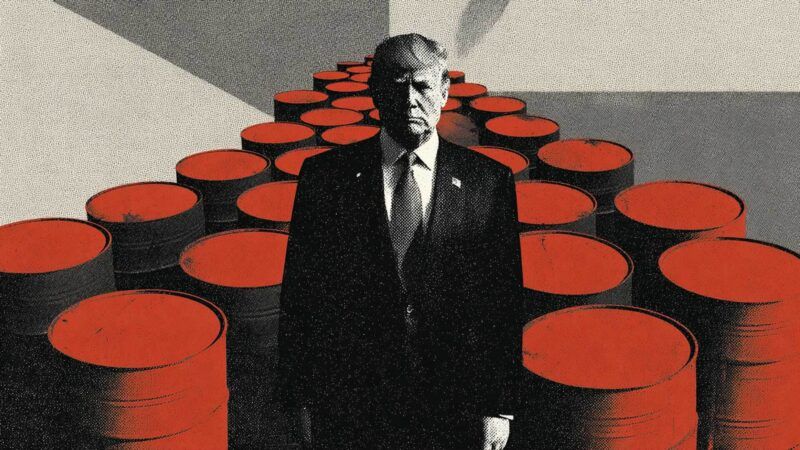
 Trump’s Gamble in Venezuela: Power, Oil, and Political Illusion


Trump's plan for 30 million barrels of Venezuelan oil doesn't add up

Donald Trump’s push into Venezuela isn’t about democracy or freedom—it’s about oil, control, and the illusion of cheap energy at home. But between ambition and reality lies a deep political and economic trap.

The Real Target: Oil, Not Democracy

The latest political and military moves by the United States in Venezuela leave little doubt about Donald Trump’s priorities. His goal isn’t to restore democracy or free Venezuelans from Nicolás Maduro’s authoritarian rule. What Trump really wants is control—control over Venezuela’s oil.

He appears convinced that if he can bring Venezuela’s vast untapped reserves to market, gasoline prices in the U.S. will drop, giving him a political boost ahead of November’s midterm elections. But as I argued in Le Monde, this ambition is far from straightforward. A sharp fall in oil prices would make many U.S. wells—particularly those dependent on expensive fracking—unprofitable, leading to reduced production and, eventually, another price surge. The promise of cheap gas may be little more than a mirage.


A Costly Calculation

While the U.S. holds significant reserves, extracting them is increasingly expensive—about $60 per barrel today and possibly $95 by 2030. Venezuela, by contrast, boasts the world’s largest oil reserves and lower extraction costs (around $40 a barrel). Yet its crude is heavy and sulfur-rich, making it costly to refine.

Reviving Venezuela’s decrepit industry would require massive investment, but the technical hurdles are surmountable. For Trump, that represents a dual opportunity: to expand U.S. oil companies’ footprint and secure cheaper crude at a time when energy has become a central campaign theme. His denial of climate change positions him as a defender of fossil fuel interests, deepening his hostility toward renewables.


A Modern Imperial Logic

Trump has described his plan in language that harks back to an imperial past. “We’re going to exploit Venezuelan oil, and we want to be paid for our services,” he said. It’s a modern form of extractive imperialism—echoing the colonial “home charges,” the profits empires once claimed for managing their colonies’ resources.

In this worldview, Venezuela is not a partner but a territory to be mined and billed. Beneath this rhetoric lies a deeper energy struggle with China. Beijing currently buys roughly 80 percent of Venezuela’s oil, making Caracas a crucial supplier for its energy security. If Washington could sever that link, it would deal a strategic blow to China’s access to cheap hydrocarbons—a major advantage in the global energy race.

Trump seems to grasp a century-old truth: whoever controls energy, controls power. Yet his Venezuela policy is not just another act of U.S. interference—it’s part of a global scramble for dwindling resources in an era when even America’s oil is no longer “cheap.”


The Gap Between Ambition and Reality

The problem is that Venezuela’s oil infrastructure is on the verge of collapse. Years of mismanagement, corruption, and sanctions have left it in ruins. Political economist John Rapley estimates that restoring it would require over $100 billion in investment over the next 15 years.

For oil majors like Chevron, ExxonMobil, and ConocoPhillips, Venezuela is a high-risk venture plagued by legal uncertainty, past expropriations, and political instability. More stable and profitable opportunities exist in Africa, the Middle East, and North America. Repsol, however, may stand to gain thanks to its regional presence and experience; the company plans to triple its investments and output there.


The Political Trap

History offers a sobering lesson. In Iraq and Afghanistan, local militias drove out U.S. forces despite overwhelming military might. Trump and his advisers—isolated in Washington and surrounded by loyalists—seem to ignore how national pride and humiliation can reignite resistance. Underestimating this political dynamic could turn his Venezuelan adventure into another costly quagmire.

Could Trump truly stabilize Venezuela under the new president, Delcy Rodríguez? He insists that free elections are a distraction from the urgent need to revive oil production. But analysts point out a simple truth: without political legitimacy, there can be no sustainable investment.

Without credible elections and a solid democratic framework, foreign capital won’t flow, and neither production nor exports will rise significantly. Energy companies, no matter how pragmatic, need legal guarantees and institutional predictability before committing to long-term projects.


Energy, Power, and the Price of Control

Trump’s Venezuela strategy blends economic ambition, electoral calculus, and geopolitical maneuvering. His aim is clear: dominate oil to control prices, weaken China, and campaign as the president who “brought back American energy.”

But Venezuela’s grim reality—its shattered infrastructure, entrenched political divides, and collapsing economy—makes this vision far more complicated than his rhetoric suggests. On the global energy chessboard, Venezuela is both a coveted prize and a political labyrinth.

Trump is learning what every empire has eventually discovered: even in oil politics, no barrel comes cheap.


Mahmoud M. Rabbani
Director, Sustainable Development Overseas Programme
PhD in Chemical Sciences